
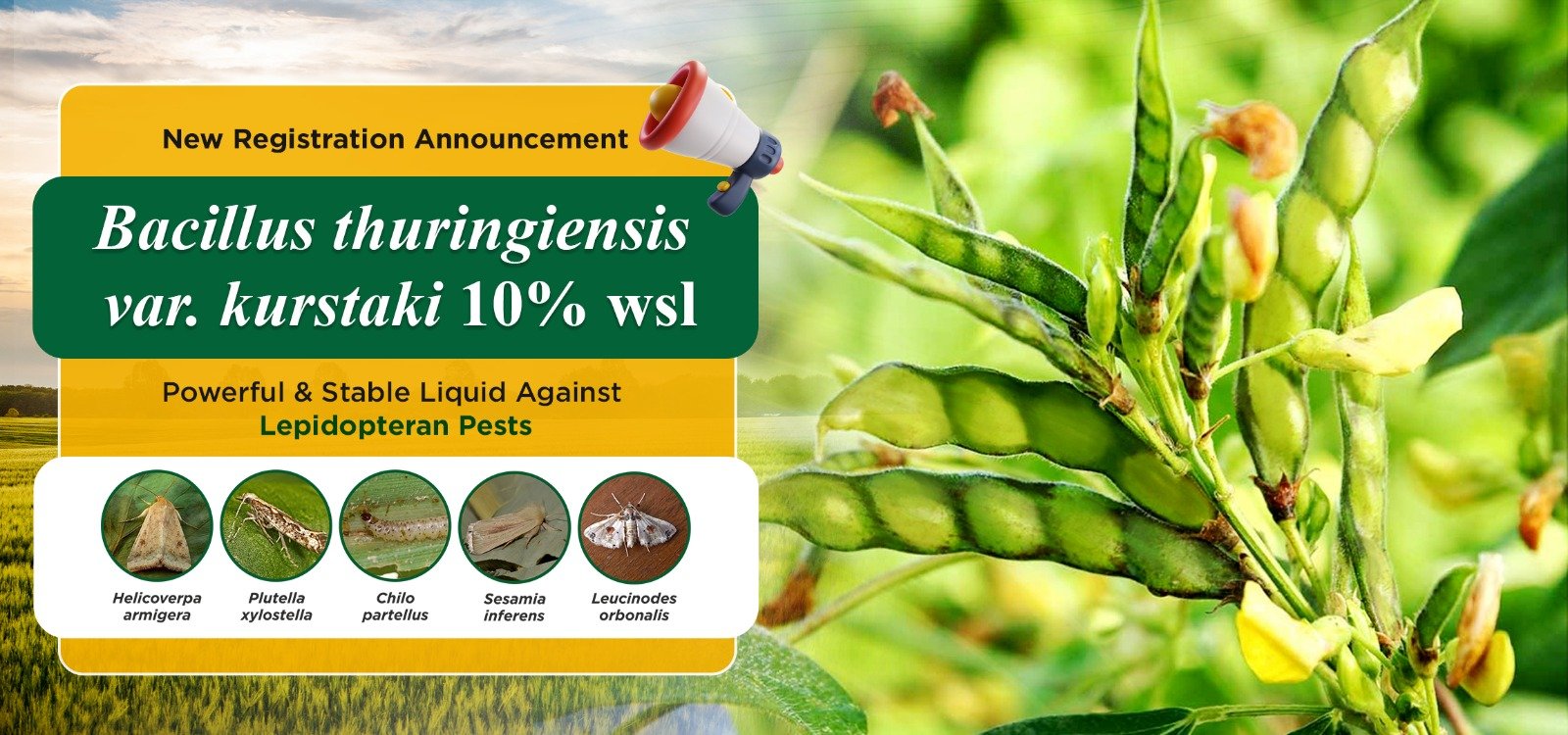
Pod borer has remained one of the most difficult pests to manage in red gram. Farmers who grow Pigeon Pea (Arhar) already know how quickly an infestation of Helicoverpa armigera can reduce pod formation and directly cut down yield. In many regions, repeated chemical sprays have been the only response, yet over time the results have become inconsistent. Resistance, residue concerns, and rising input costs have made the problem more complicated than it used to be.
In this context, the introduction of a reliable biological solution is not just another product launch. It changes how farmers can approach pest management in a more stable and sustainable way.
Peptech Biosciences Limited has received registration for its microbial insecticide based on Bacillus thuringiensis var. kurstaki 10% WSL, approved by the Central Insecticides Board and Registration Committee. The formulation has been developed for effective control of Helicoverpa armigera in red gram and is built using technology from National Bureau of Agricultural Insect Resources.
Understanding the Pod Borer Problem in Red Gram
Pod borer does not damage the crop in a superficial way. The larvae feed directly on flowers and developing pods, which means the loss is immediate and visible. Even a moderate infestation during flowering or pod formation can result in a significant drop in yield.
What makes the situation more challenging is timing. Farmers often notice damage only after the larvae have already entered the pods. At that stage, many conventional sprays fail to deliver consistent control.
This is where biological insecticides behave differently.
What Makes Bacillus thuringiensis kurstaki Effective
The active organism, Bacillus thuringiensis var. kurstaki works in a very specific way. Unlike contact insecticides, it needs to be ingested by the larvae. Once consumed, it releases proteins that affect the gut of the insect, stopping feeding almost immediately.
In practical field terms, this means:
- The larvae stop damaging the crop soon after ingestion
- The pest population gradually declines without sudden flare-ups
- Beneficial insects are not disturbed in the same way as with broad-spectrum chemicals
Because of this targeted action, the crop gets protection without disrupting the overall field ecology.
How This Helps in Managing Pod Borer
1. Targeted Control of Pod Borer
This formulation is specifically positioned for Helicoverpa management in red gram. Instead of a general approach, it focuses on the pest that causes the most economic damage.
2. Supports Sustainable Crop Protection
Biological solutions reduce dependency on repeated chemical applications. Over time, this helps in maintaining soil health and reducing residue-related concerns.
3. Better Fit in Spray Programs
Since it works differently from chemical insecticides, it can be included in rotation programs. This helps in managing resistance, which has become a real issue in many cropping systems.
4. Field-Relevant Formulation
The product is available as a water-soluble liquid (WSL), making it easier to handle, mix, and apply in comparison to older formulations.
How P2P Partners Benefit from This Registration?
For P2P partners, this registration creates a ready opportunity to enter or strengthen their biological portfolio with a CIBRC-approved product, reducing the time and complexity involved in launching a new molecule. With a formulation based on Bacillus thuringiensis var. Kurstaki and developed using technology from the National Bureau of Agricultural Insect Resources, partners get access to a solution that is already aligned with current market demand for residue-safe and sustainable crop protection. It allows brands to position themselves strongly in the growing biological segment, offer a targeted solution for pod borer in red gram, and build farmer trust with a product that delivers consistent field performance. At the same time, working in a P2P model ensures partners can focus on branding and market expansion, while the manufacturing and formulation consistency remain taken care of in the background.
Moving Toward a More Balanced Crop Protection Approach
Over the years, farmers have seen how over-reliance on a single type of chemistry leads to diminishing results. Pest pressure does not reduce, but control becomes more expensive and less reliable.
Introducing biological tools like Bacillus thuringiensis var. kurstaki changes this approach. Instead of reacting to the problem after it spreads, farmers can manage it in a more controlled and preventive way.
This is not about replacing chemicals overnight. It is about building a program where different tools work together, reducing risk and improving consistency.
Conclusion
Pod borer management in red gram has always required careful attention. With the registration of Bacillus thuringiensis var. kurstaki 10% WSL, farmers now have access to a biological option that is both targeted and practical for field use.
When used at the right stage and in the right way, it gives farmers more control over one of the most damaging pests in the crop, while also supporting a more sustainable way of farming.
Frequently Asked Questions (FAQs)
1. What is Bacillus thuringiensis var. kurstaki 10% WSL?
It is a biological insecticide based on Bacillus thuringiensis var. kurstaki. It controls caterpillar pests like pod borers by affecting their feeding system after ingestion.
2. Which pest does it control in red gram?
It is mainly used for managing Helicoverpa armigera, the pod borer that damages flowers and pods in red gram.
3. How does Bacillus thuringiensis var. kurstaki 10% WSL work in the field?
After spraying, the larvae consume the treated plant surface. Once inside the gut, the bacteria release proteins that stop feeding. The pest gradually dies, and crop damage is reduced.
4. When should farmers apply it?
It works best when applied at the early larval stage. Waiting until heavy infestation reduces effectiveness, so regular crop monitoring is important.
5. How is it different from chemical insecticides?
Chemical insecticides usually act on contact and give quick knockdown. This product works through ingestion and is more targeted. It does not disturb beneficial insects in the same way and fits better in long-term pest management.
6. Is it safe for beneficial insects and the environment?
Yes, it is considered safe for beneficial insects, pollinators, and the environment when used as recommended. That is why it is widely used in sustainable farming practices.