
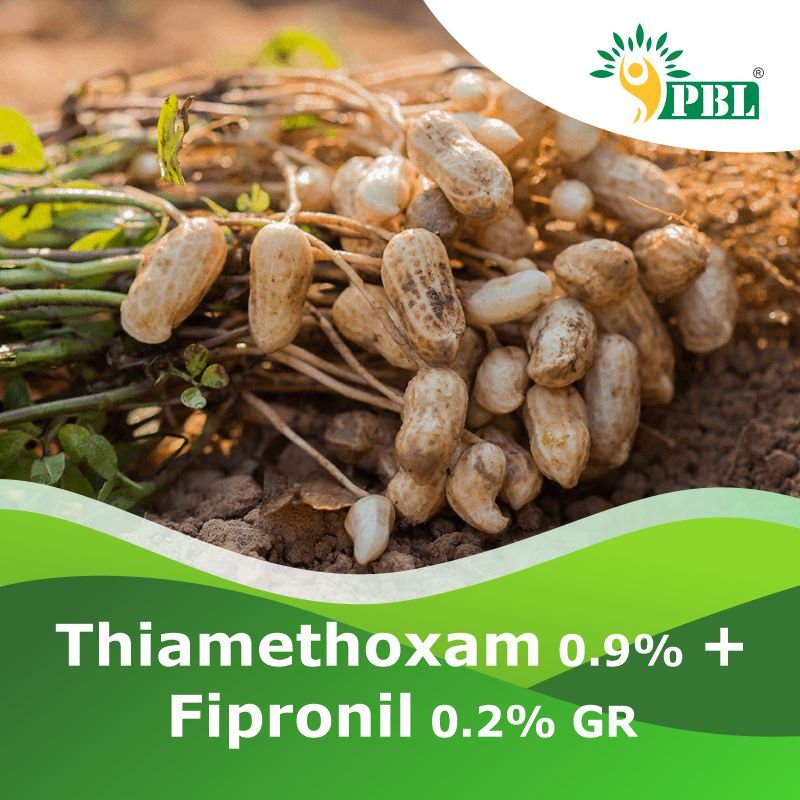
Description
Mode of Action
Thiamethoxam belongs to the neonicotinoid class of insecticides. It acts as a systemic insecticide, meaning it is absorbed by the plant and transported to different parts, including the leaves, stems, and roots. Once inside the plant, thiamethoxam targets the nervous systems of insects, particularly those that feed on the treated plant. It binds to specific nicotinic acetylcholine receptors, causing disruption in nerve signal transmission. This results in the paralysis and eventual death of the insect. While Fipronil is a phenylpyrazole insecticide that acts as a contact and stomach poison. It targets a broad range of insect pests. When insects come into contact with fipronil-treated surfaces or ingest the insecticide, it affects their central nervous system. Fipronil blocks the passage of chloride ions through gamma-aminobutyric acid (GABA) receptors, leading to hyperexcitation of nerve cells. This overstimulation ultimately leads to the paralysis and death of the insects.
Benefits of Thiamethoxam 0.9% + Fipronil 0.2% GR
- Broad-spectrum control of insects
- Long-lasting residual activity
- Effective against soil-dwelling insects
- This works synergistically to provide dual-action insecticidal activity.
Application Method
Broadcasting
Target Crops, Pest, and Dosage of Thiamethoxam 0.9% + Fipronil 0.2% GR
|
Crop(s) |
Target Insect |
Dosage/Acre (Kg) |
|
Groundnut |
White grub and Termite |
4-6 |