
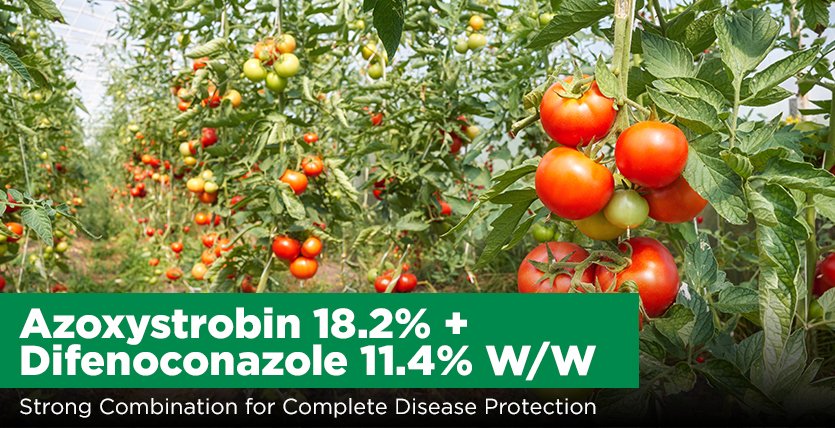
In many crops, fungal diseases do not give a clear warning before spreading. A few spots on leaves or slight yellowing often gets ignored, but within days the infection can spread across the field. At that stage, recovery becomes difficult and yield is already affected. This is why farmers prefer combination fungicides that can handle both early protection and active infection.
Azoxystrobin 18.2% + Difenoconazole 11.4% W/W is one such combination, designed to give balanced disease control. It works at different stages of infection, which makes it useful in real field conditions where timing is not always perfect.
Understanding the Combination
This product brings together two active ingredients with different roles inside the plant.
Azoxystrobin mainly works on the surface and provides preventive protection. It stops fungal spores from germinating and spreading.
Difenoconazole moves inside the plant and controls fungal growth from within. It helps stop the disease even after infection has started.
Because both actions happen together, the crop gets wider and more reliable protection.
How It Works in the Field
After spraying, the product forms a protective layer on the leaf surface while also moving inside the plant tissues.
Azoxystrobin blocks the energy production of fungi, which stops new infection. At the same time, Difenoconazole interferes with fungal growth inside the plant, slowing down and controlling the disease.
This dual action helps in managing both visible and hidden infection.
Diseases It Commonly Controls
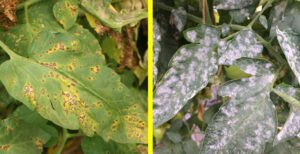
This combination is effective against a range of fungal diseases
- Leaf spot
• Blight diseases
• Powdery mildew
• Anthracnose
In crops where more than one disease appears together, this combination becomes especially useful.
Crops Where It is Used
Farmers use this combination in different crops depending on disease pressure
- Fruits like grapes, mango and pomegranate
• Vegetables like tomato and chilli
• Field crops like cereals and pulses
In these crops, disease control during early and mid stages plays a big role in final yield
Application Approach
For consistent results, correct timing and coverage are important
- Spray at early stage of disease or before infection spreads
• Ensure proper coverage on leaves
• Repeat based on crop condition and disease pressure
Delaying the spray often reduces the effectiveness of any fungicide.
Key Benefits
- Provides both preventive and curative control
• Broad spectrum disease management
• Supports healthier plant growth
• Useful in different crops and conditions
Conclusion
Disease management is more effective when handled early and with the right approach.
Azoxystrobin 18.2% + Difenoconazole 11.4% W/W offers a balanced solution by combining surface protection and internal control. When used at the right time, it helps reduce disease spread and supports better crop performance throughout the season.
FAQs
- What diseases does this combination control?
It controls leaf spots, blights, powdery mildew and anthracnose. - When should it be applied?
At an early stage of disease or before infection becomes severe. - Why is this combination effective?
Because it provides both external protection and internal control. - Can it be used in multiple crops?
Yes, it is used in fruits, vegetables and field crops. - Should it be used repeatedly?
It is better to rotate with other fungicides to avoid resistance.